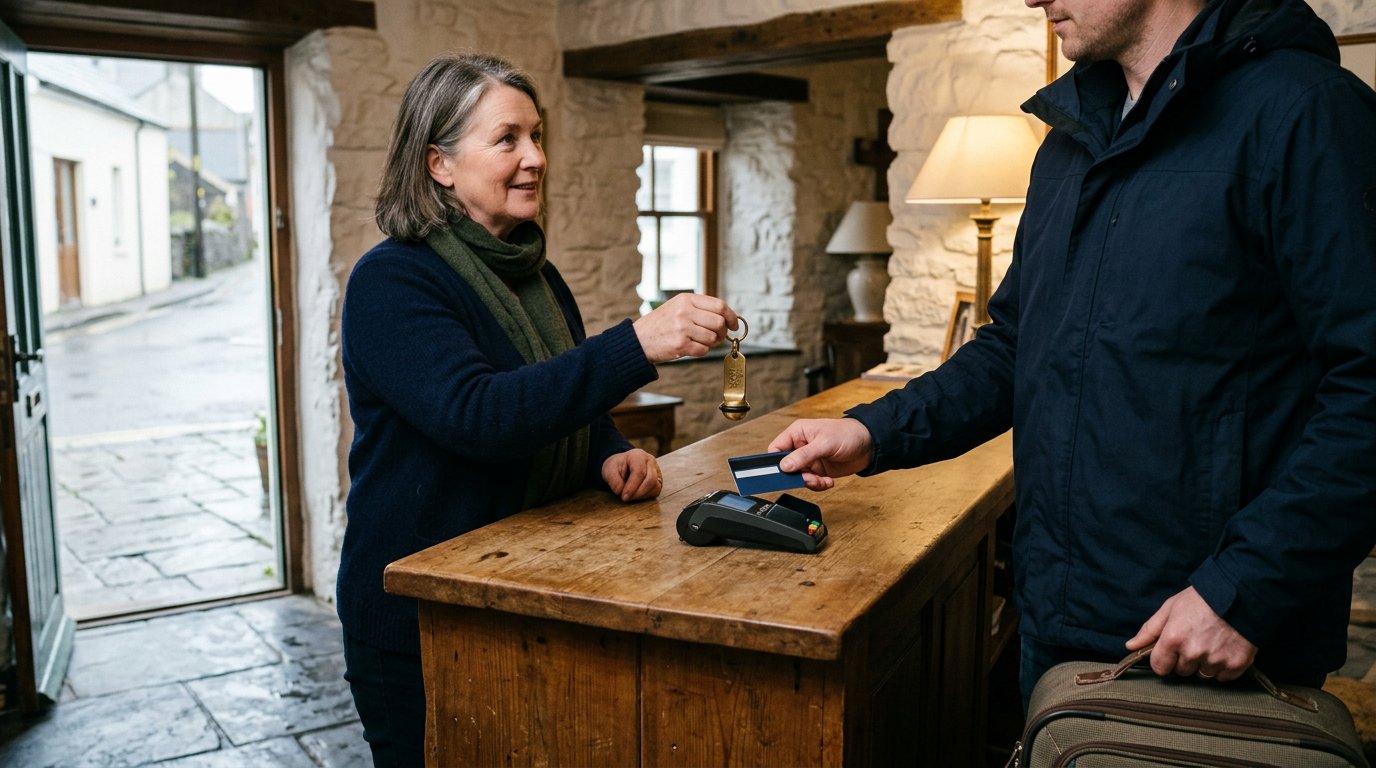
The right payment processing for a small business depends on how customers buy: in person, online or by phone. For a credit card payment, the remaining funds are deposited into your business bank account within a few business days. Payment links and invoices can also make it easier to collect money without a face-to-face checkout.
Choosing a payment method is about more than accepting cards. You need a setup that fits your day-to-day work, gives customers a convenient way to pay and supports sales in Ireland or abroad.
This guide explains how payment processing works, compares common options and shows what to consider for payment links, invoices and phone payments. Use it to match a payment method to your business and the customers you serve.
Key Takeaways
- Match in-person and online payment methods to how local and international customers prefer to pay.
- Compare cash, cards, cheques and digital options by convenience, settlement process and suitability for your day-to-day sales.
- Use payment links, invoices or phone payments to collect money when customers aren’t beside you.
- See how WaPay’s Payments and Invoices can help organise payment collection alongside everyday business admin.
Table of Contents
How can small businesses handle international payments?
Offer payment methods that suit how customers buy, then compare transaction fees by channel. For international sales, consider supported currencies and the checkout experience too.
Online payment options
An online checkout lets customers pay on your website, often by card or mobile wallet. In-person transactions use a terminal, while keyed-in payments involve entering card details manually. Providers may charge different rates for each channel, so compare online, in-person and keyed-in pricing separately. Check which currencies customers can use and which currency you receive.
Online payment gateways
A gateway connects your website checkout to a payment provider. It can support international customers with multiple payment methods and currencies. Website integration may use tools or an API supplied by the provider. Compare checkout options, currency handling and transaction fees, including any monthly charge. A familiar payment option can make it easier for customers to complete a purchase.
| Option | Where it works | Compare |
|---|---|---|
| Card or mobile wallet | Online or in person | Channel rates and currency |
| Gateway checkout | Website | Integration and payment methods |
| Keyed-in card | Remote sale | Transaction rate and process |
Choose based on where customers pay, which currencies they need and the transaction fees for each channel.
VAT receipts, refunds and chargebacks
In Ireland, a payment processor records the transaction; it does not determine the VAT treatment of a sale. Use your sales records to match each payment with its VAT receipt or invoice. Record any refund against the original transaction. A chargeback is a card payment dispute, so keep the sale record, customer correspondence and proof of fulfilment together to support your response.
How does payment processing work for small businesses?
Payment processing for a small business starts with choosing how to collect money: cash, bank transfer, card or digital wallet. Your setup shapes how customers pay, how you record sales and when funds arrive.
Cash, cheque and digital payment methods
Cash settles at the counter, while a cheque must be deposited and cleared. Digital bank transfers move money between accounts; ACH is a US payment network, not Ireland’s domestic transfer system. Card payments go through a processor, which sends the transaction for authorisation before settlement. For online billing, a payment gateway connects the checkout to the processor.
To set up payment processing for a small business, choose a provider, connect online payments to your website or card payments to a terminal, and organise how sales records match your accounts. Select options that suit where and how you sell.
Card, contactless and mobile wallet acceptance
A card terminal accepts chip-and-PIN or contactless payments. Contactless uses NFC between the customer’s card or device and the terminal. Mobile wallets store payment details for purchases made with a smartphone or wearable device. These options suit face-to-face sales; online card payments need a checkout linked to a gateway.
In Ireland, a payment service provider processes transactions under its terms. Treat any card surcharge as a separate compliance decision: a provider’s settings alone do not establish whether a surcharge is permitted.
Card and bank payment costs and reliability
Card processing involves authorisation, processing and settlement. For credit card payments, the remaining funds are deposited into the business bank account within a few business days. ACH transfers commonly take one to three business days to settle, but ACH is a US network and shouldn’t be confused with Irish bank transfers.
Compare provider charges by payment method and channel, then weigh them against the checkout or terminal you need. Card payments offer a direct checkout route; bank transfers require the customer to complete the transfer correctly.
Point-of-sale and credit card processing
A point-of-sale terminal captures a card payment and sends it through the processor for authorisation. The processor passes the request through the payment network, then settlement moves funds to your account. For online sales, a gateway connects the checkout instead of a physical terminal.
Businesses handling card data should comply with PCI DSS, a payment-card security standard. Keep card details within the payment provider’s secure flow, and compare its security steps, settlement process and payment options before choosing payment processing for a small business.
Payment links, invoices and phone payments
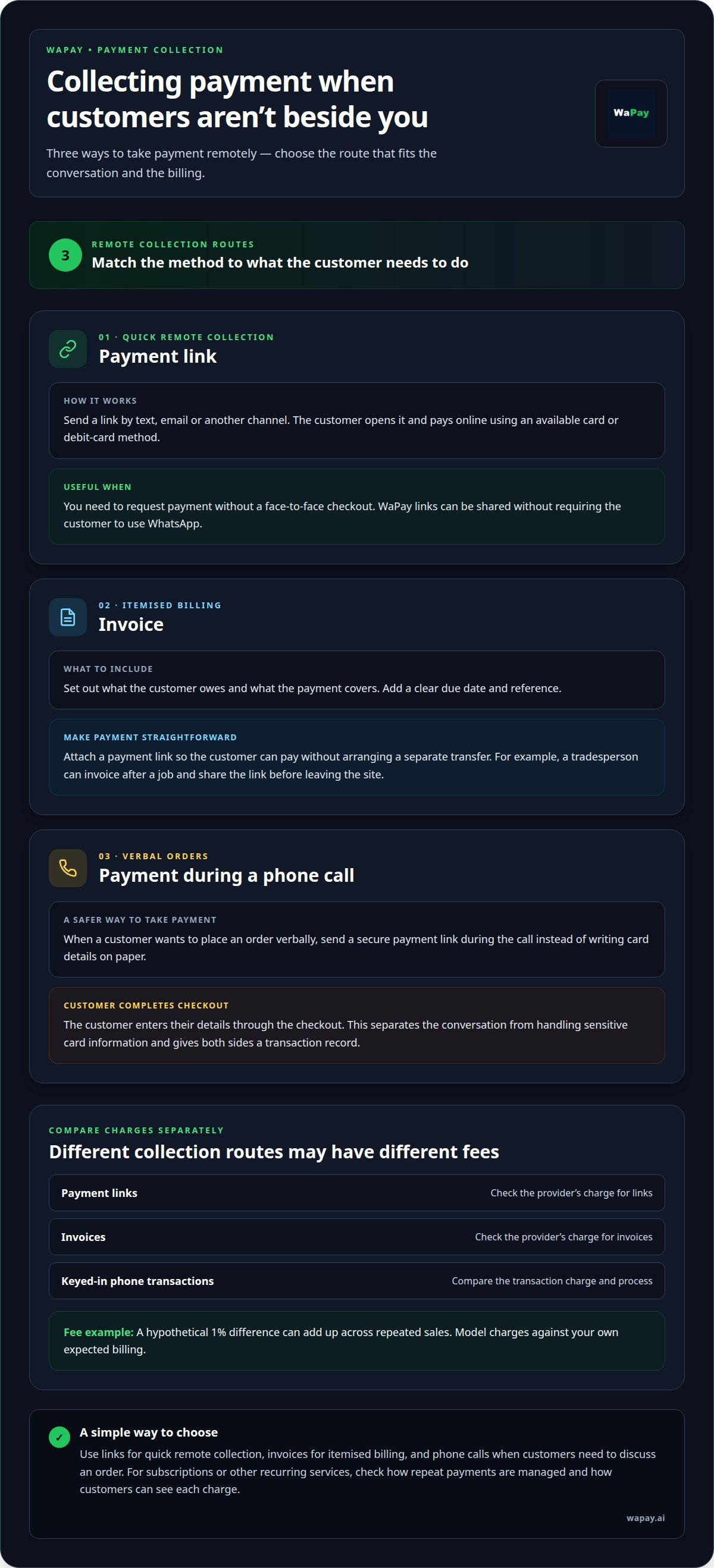
A payment link lets a merchant request payment without a face-to-face checkout. Send it by text or email after a call, or include it on an invoice. The customer opens the link and pays online using an available card or debit card method. WaPay payment links can also be shared by SMS, email or another channel, so customers do not need to use WhatsApp.
An invoice sets out what the customer owes and what the payment covers. Include a clear due date and reference, then attach a payment link so the customer can pay without arranging a separate transfer. For example, a tradesperson can send an invoice after a job and share the link before leaving the site.
Phone payments suit customers who want to place an order verbally. Instead of writing card details on paper, send a secure payment link during the call. The customer enters their details through the checkout. This separates the conversation from handling sensitive card information and gives both sides a transaction record.
Compare the provider’s charges for payment links, invoices and keyed-in phone transactions separately. A 1% difference in a hypothetical transaction fee can add up across repeated sales, so model charges against your own expected billing. For a subscription or other recurring service, check how repeat payments are managed and how customers can see each charge.
Choose links for quick remote collection, invoices for itemised billing and phone calls when customers need to discuss an order. You can combine these routes while keeping each payment connected to its sales record.
WaPay: Payments
WaPay can help when collecting payments also involves creating invoices and managing business admin. Send a voice note or text through WhatsApp or the WebApp to create an invoice and payment link. Customers can pay by bank transfer, card, Apple Pay or Google Pay, with funds going directly to your business bank account.
Use Payments to collect money and Invoices to record what a customer owes. Bills and Bookings support other everyday admin in the same workflow. Payment reminders, VAT records and a live business dashboard help keep follow-up and records together.
This setup suits sole traders who want to manage payment tasks through messages rather than add another app to their routine. WaPay is not business banking or a physical card terminal, so it may not suit every checkout need.
Visit WaPay to get started with payments and invoices through WhatsApp or the WebApp.
Make your next payment decision practical
Choosing payment processing for your small business is easier when you start with the task you need to solve. Decide whether you need to collect money remotely, organise customer invoices or keep payment records clearer. Then compare options against that job rather than adding features you will not use.
If payment collection and routine administration are taking time away from your work, WaPay brings Payments, Invoices and Bills together. This supports the practical flow from requesting payment to keeping business records organised. Choose a setup that suits your customers and the way you work, then build from there.
Take the next step at a pace that works for your business.
A more manageable payment routine starts with one useful change.
Frequently Asked Questions
Are there any advantages to offering online payment gateways for small businesses?
Yes. A gateway lets customers complete online purchases without arranging payment face to face or by phone. It brings checkout and payment confirmation into the website journey, making it easier to match an order with its payment. For an Irish business selling abroad, check that the checkout supports the payment methods and currencies its customers use.
Which payment provider has the lowest fees?
No single provider is cheapest for every Irish business. The total depends on your mix of card, bank and international payments, alongside transaction size and sales volume. Compare the full fee schedule, including fixed charges, refunds and chargebacks, against your own typical sales. A low headline percentage may not mean the lowest overall cost if other charges apply.
Can small businesses accept contactless payments?
Yes. A small business can accept contactless card or mobile-wallet payments through a compatible point-of-sale terminal. Before choosing a setup, consider where you take payments, whether the terminal suits your working environment and how you will record each sale. For example, a mobile tradesperson may need a portable way to take payment at a customer’s premises.
Can small businesses integrate payment options into their websites?
Yes. A payment service provider can supply an API that connects payment options to a website checkout. This can suit businesses that want payments built into their existing online order flow. Decide what customers should see at checkout, then plan how payment confirmations will connect with order records and day-to-day accounts.
Can small businesses set up customised payment plans for customers?
Yes. A business can arrange instalments or tie payments to agreed project milestones. For example, a service provider could invoice at separate stages rather than requesting the full amount upfront. Set out each payment amount, due point and what it covers in writing, then track each instalment against the customer’s account to keep balances clear.
Frequently asked questions
Are there any advantages to offering online payment gateways for small businesses?
Yes. A gateway lets customers complete online purchases without arranging payment face to face or by phone. It brings checkout and payment confirmation into the website journey, making it easier to match an order with its payment. For an Irish business selling abroad, check that the checkout supports the payment methods and currencies its customers use.
Which payment provider has the lowest fees?
No single provider is cheapest for every Irish business. The total depends on your mix of card, bank and international payments, alongside transaction size and sales volume. Compare the full fee schedule, including fixed charges, refunds and chargebacks, against your own typical sales. A low headline percentage may not mean the lowest overall cost if other charges apply.
Can small businesses accept contactless payments?
Yes. A small business can accept contactless card or mobile-wallet payments through a compatible point-of-sale terminal. Before choosing a setup, consider where you take payments, whether the terminal suits your working environment and how you will record each sale. For example, a mobile tradesperson may need a portable way to take payment at a customer’s premises.
Can small businesses integrate payment options into their websites?
Yes. A payment service provider can supply an API that connects payment options to a website checkout. This can suit businesses that want payments built into their existing online order flow. Decide what customers should see at checkout, then plan how payment confirmations will connect with order records and day-to-day accounts.
Can small businesses set up customised payment plans for customers?
Yes. A business can arrange instalments or tie payments to agreed project milestones. For example, a service provider could invoice at separate stages rather than requesting the full amount upfront. Set out each payment amount, due point and what it covers in writing, then track each instalment against the customer’s account to keep balances clear.