
You can ask customers for payment while preserving trust by keeping your message polite, clear and specific. Refer to the invoice, state its due date and, if it’s overdue, ask when they can pay. Confirm the agreed date in writing.
Knowing how to ask customers for payment can feel awkward, especially when you want to protect a good working relationship. But leaving a missed payment unaddressed can make cash flow harder to manage. A calm, prompt reminder gives your customer a clear next step.
This article explains how to set expectations from the start, write a courteous payment request and follow up if an invoice remains unpaid. You’ll also learn how to discuss a payment plan when a customer is struggling, so you can be fair while keeping the next step clear.
Key Takeaways
- Keep payment requests calm and specific: refer to the invoice and agree a clear payment date if your customer needs more time.
- Set out payment terms before work begins, then make sure your invoice clearly shows when and how to pay.
- Use a friendly reminder before the due date, and follow up promptly without accusatory language if payment is late.
- WaPay can help you send invoices with payment links, so customers have a clear next step and you spend less time chasing paperwork.
Table of Contents
Can you ask for payment while maintaining the relationship?
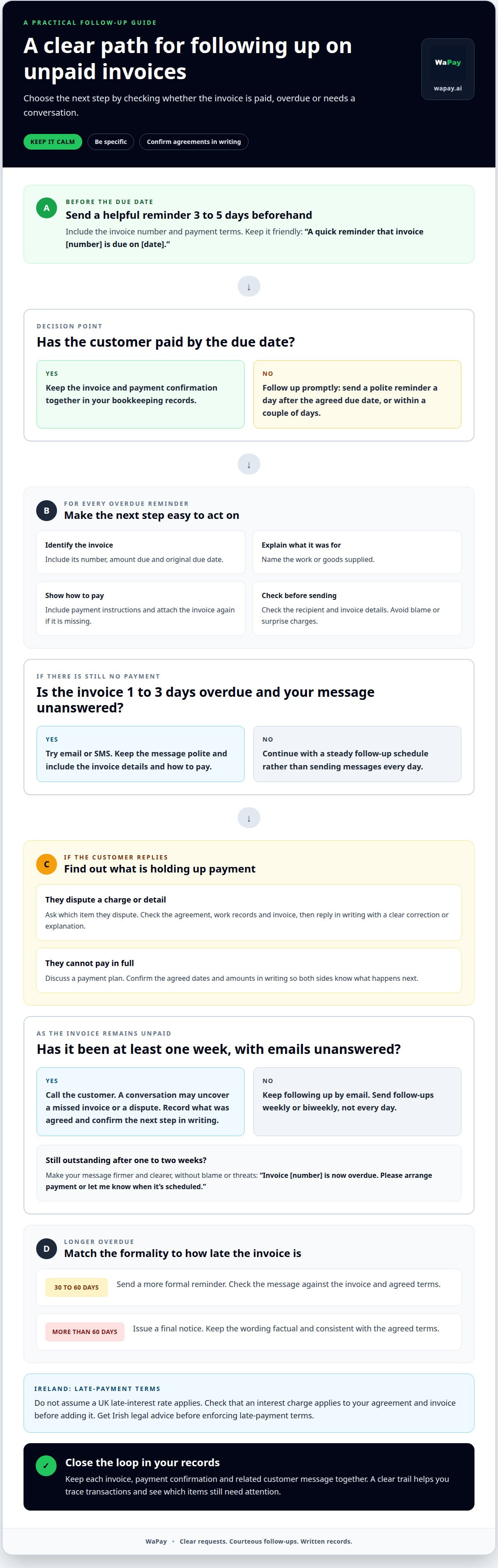
Yes. Keep your request courteous, specific and in writing. In Ireland, don’t assume a UK late-interest rate applies. Set out agreed late-payment terms clearly and get Irish legal advice before enforcing them.
-
Understand why professional requests matter
Treat payment as a normal part of client conversations, not a personal criticism. A clear request protects the relationship because both sides can see the invoice, due date and next step. Don’t wait until frustration builds. If your client is struggling, ask them to suggest a firm payment date, then confirm it in writing.
-
Follow professional payment-request rules
Follow five rules: identify the invoice; state the amount and due date; keep the tone friendly; give a clear way to pay; and record any agreed change. Check the invoice details before sending. Don’t add blame or surprise charges. If the client needs more time, discuss a payment plan and write down the agreed dates so later conversations stay clear.
-
Phrase payment requests politely
Refer to the invoice and make a direct request. For example: “Hi Sam, I’m following up on invoice [number], due [date]. Could you arrange payment, or let me know when it’s scheduled? Thanks.” Asking them to let you know invites a reply while keeping the request clear. If it’s overdue, politely ask for a firm payment date.
-
Use an upfront-payment email template
Raise the deposit during your first payment conversation, before work begins. State the agreed share, such as a 50% deposit, and explain when the remaining balance is due. Example: “Subject: Deposit for [project]. Hi [name], to book the work, I request a 50% deposit before we begin. The balance is due [agreed stage]. Please let me know if you’d like to discuss the terms. Kind regards, [name].”
How to prevent late payments?
Set out payment terms in the agreement, issue clear invoices promptly and make reminders part of your routine. For Irish business invoices, statutory late-payment interest is governed by Ireland’s applicable rules. Check that an interest charge applies to your agreement and invoice before adding it.
- Agree the payment terms before work starts. Record the due date, payment method and any deposit in the contract or proposal. For a larger job, agree payments at project milestones. Send the invoice as soon as the work is complete, so the customer knows what’s due and when. Clear terms make follow-ups easier.
-
Include invoice details in reminders
Make each reminder easy to act on. Include the invoice number, amount due, original due date, work or goods supplied, and payment instructions. Attach the invoice again if the customer says it’s missing. Check the recipient and details before sending. A complete reminder reduces back-and-forth and gives both sides a clear record.
-
Handle invoice disputes and inability to pay
Ask the customer which charge or detail they dispute. Compare their concern with the agreement, work records and invoice, then reply in writing with a clear correction or explanation. If they can’t pay in full, discuss a payment plan and confirm its dates and amounts in writing. Keep the agreed terms clear so neither side is left waiting.
- Schedule reminders before and after the due date, then follow up by phone if emails go unanswered. A call can uncover a missing invoice or a cash-flow problem; record what was agreed afterwards. If an unpaid invoice is putting pressure on cash flow, invoice finance may provide early access to funds against it, subject to its terms. You can organise invoice reminders as part of your routine.
What are some common mistakes when asking clients for payment?
Set a steady reminder schedule based on the invoice due date. A clear message is easier to act on than an unexpected or accusatory demand.
- Send a reminder 3 to 5 days before the due date. Include the invoice number and payment terms, and frame it as a helpful prompt: “A quick reminder that invoice [number] is due on [date].” Don’t wait until the invoice is overdue to make payment easy to remember.
- Follow up promptly if payment hasn’t arrived. Send a polite reminder a day after the agreed due date, or within a couple of days. State the invoice number, amount, original due date and how to pay. For an unanswered message when an invoice is 1 to 3 days overdue, try email or SMS.
- Keep your tone professional as the invoice remains unpaid. Send follow-ups weekly or biweekly, rather than every day. If payment is still outstanding after one to two weeks, make your message firmer and clearer. For example: “Invoice [number] is now overdue. Please arrange payment or let me know when it’s scheduled.” Avoid blame or threats.
- If messages haven’t worked, contact the client directly. If the invoice is at least one week overdue and emails go unanswered, call them. A conversation can reveal a missed invoice or a dispute. Note what they say and confirm any agreed next step in writing. Don’t assume silence means refusal to pay.
- Escalate the wording, not the emotion. For invoices 30 to 60 days overdue, send a more formal reminder. If payment is more than 60 days overdue, issue a final notice. Use templates to keep details consistent, but check each message against the invoice and agreed terms.
Keep payment records together
Keep each invoice, payment confirmation and related customer message together in your bookkeeping records. A clear trail helps you trace transactions and see which items still need attention. Use a consistent filing method so records are easier to find when reviewing your accounts.
WaPay
WaPay connects business administration across WhatsApp and its web dashboard. Create invoices and payment links from voice notes or text, with an audit trail and transaction records. You can export business data as CSV whenever you need to use it elsewhere.
If you’d like to discuss whether this workflow suits your business, contact WaPay.
Make payment follow-ups part of your routine
Use what you learn from each customer interaction to improve the experience over time. Notice which details prevent confusion and where customers need clearer information. Small adjustments can make payment conversations feel like a natural part of doing business, rather than an interruption.
WaPay helps small businesses manage the administration behind their work. When you’re ready to handle invoices and payment requests through WhatsApp or the web dashboard, register online and get started without downloading an app.
Build a smoother working routine, one practical change at a time.
Frequently Asked Questions
How do you ask for a deposit politely?
Explain what the deposit secures and how it will be treated in the project account. Let the customer review the quote and payment schedule before accepting, so the deposit isn’t a surprise after work is arranged. If the scope changes or the project pauses, refer to the written terms. Don’t describe a deposit as refundable or non-refundable unless those terms say so.
What is the process for requesting payment?
Before sending a request, check that agreed changes, credit notes and part-payments are reflected in the balance. If a business customer supplied a purchase order or internal reference, include it so their accounts team can match the request. Keep the invoice and adjustment records together. This helps prevent queries about an amount that has already changed.
Which channel should you use to ask for payment?
Choose a channel the customer uses for business messages and can access easily. Confirm who handles invoice approvals, particularly if your usual contact can’t authorise payment. If one channel gets no response, a direct call can help identify the right person to follow up with. Avoid sending the same demand across several channels at once.
Why ask for upfront payments?
An upfront payment can confirm that both sides are ready to proceed before you reserve capacity. Agree in writing what the initial payment covers and how project changes affect it. That gives you a shared reference if the scope shifts or work pauses, and helps avoid later disagreement about the payment’s purpose.
How do you politely ask a customer to pay an overdue invoice?
If the customer says they’ve paid, pause further reminders while you check your bank records. Ask for the transfer date or payment reference if you need help tracing it. If the payment hasn’t appeared, focus your follow-up on the agreed next step. This avoids treating a payment in progress as a refusal and keeps your records accurate.
Frequently asked questions
How do you ask for a deposit politely?
Explain what the deposit secures and how it will be treated in the project account. Let the customer review the quote and payment schedule before accepting, so the deposit isn’t a surprise after work is arranged. If the scope changes or the project pauses, refer to the written terms. Don’t describe a deposit as refundable or non-refundable unless those terms say so.
What is the process for requesting payment?
Before sending a request, check that agreed changes, credit notes and part-payments are reflected in the balance. If a business customer supplied a purchase order or internal reference, include it so their accounts team can match the request. Keep the invoice and adjustment records together. This helps prevent queries about an amount that has already changed.
Which channel should you use to ask for payment?
Choose a channel the customer uses for business messages and can access easily. Confirm who handles invoice approvals, particularly if your usual contact can’t authorise payment. If one channel gets no response, a direct call can help identify the right person to follow up with. Avoid sending the same demand across several channels at once.
Why ask for upfront payments?
An upfront payment can confirm that both sides are ready to proceed before you reserve capacity. Agree in writing what the initial payment covers and how project changes affect it. That gives you a shared reference if the scope shifts or work pauses, and helps avoid later disagreement about the payment’s purpose.
How do you politely ask a customer to pay an overdue invoice?
If the customer says they’ve paid, pause further reminders while you check your bank records. Ask for the transfer date or payment reference if you need help tracing it. If the payment hasn’t appeared, focus your follow-up on the agreed next step. This avoids treating a payment in progress as a refusal and keeps your records accurate.